Exploring the role of AI in shaping decision-making in financial products.
This concept explores how AI can support users at critical decision moments in digital banking — specifically when confirming a financial transaction.
Rather than adding a chatbot or another layer of complexity, I approached AI as a subtle, contextual support system embedded directly into the flow. The goal was not to automate decisions, but to help users make better ones by focusing on behavior — when the system should respond, what it should communicate and how to do it without increasing cognitive load.
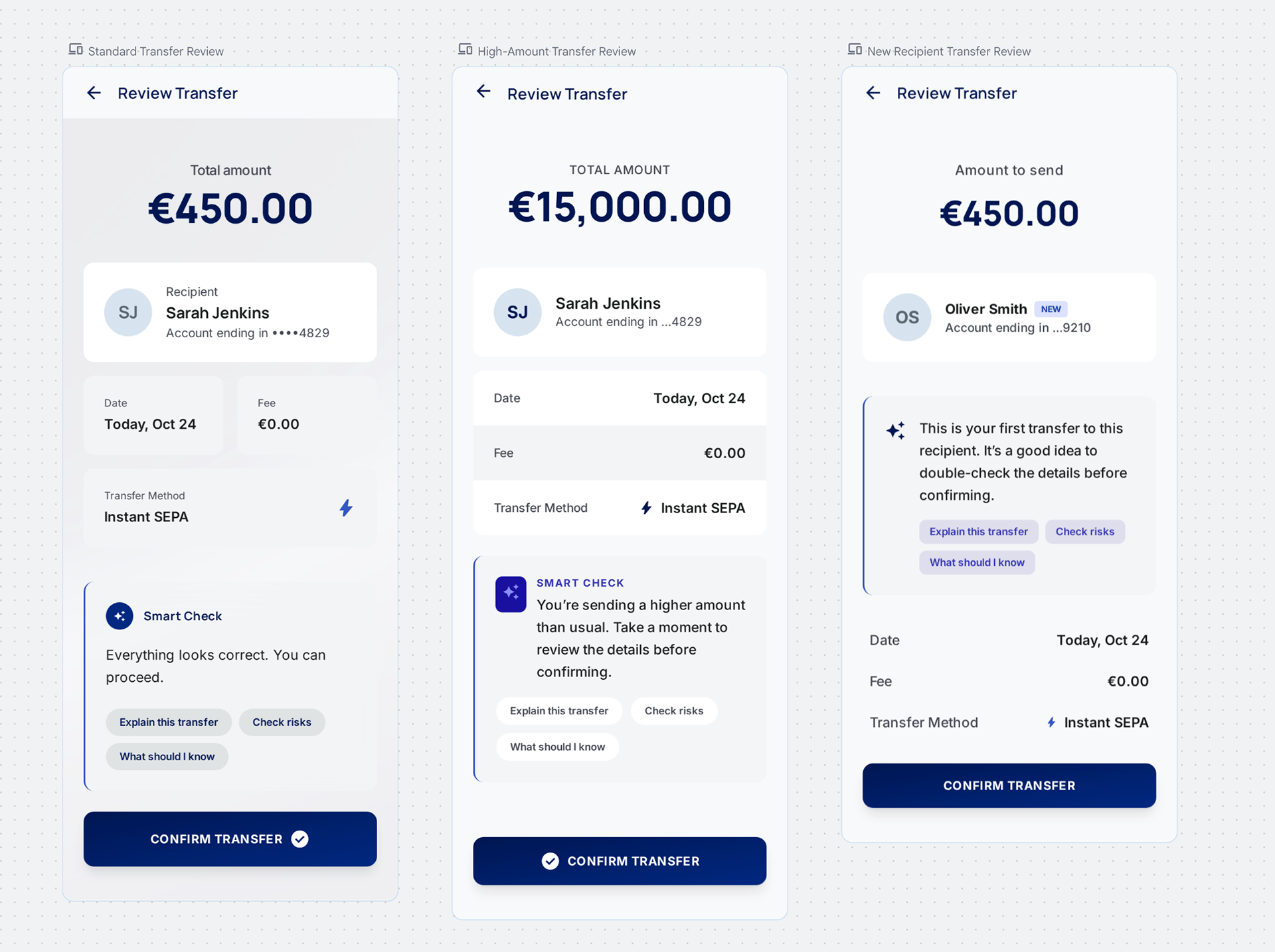
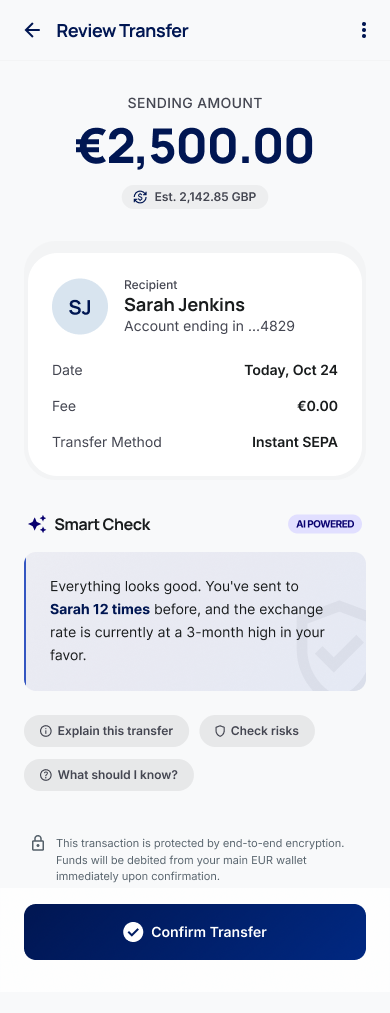
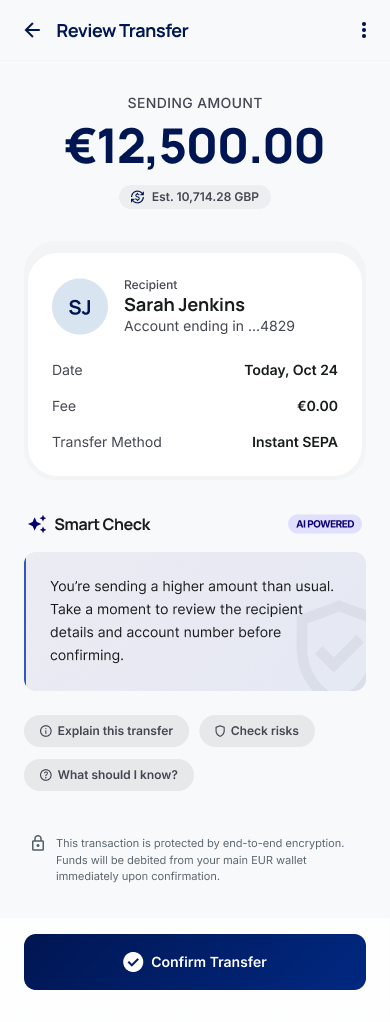
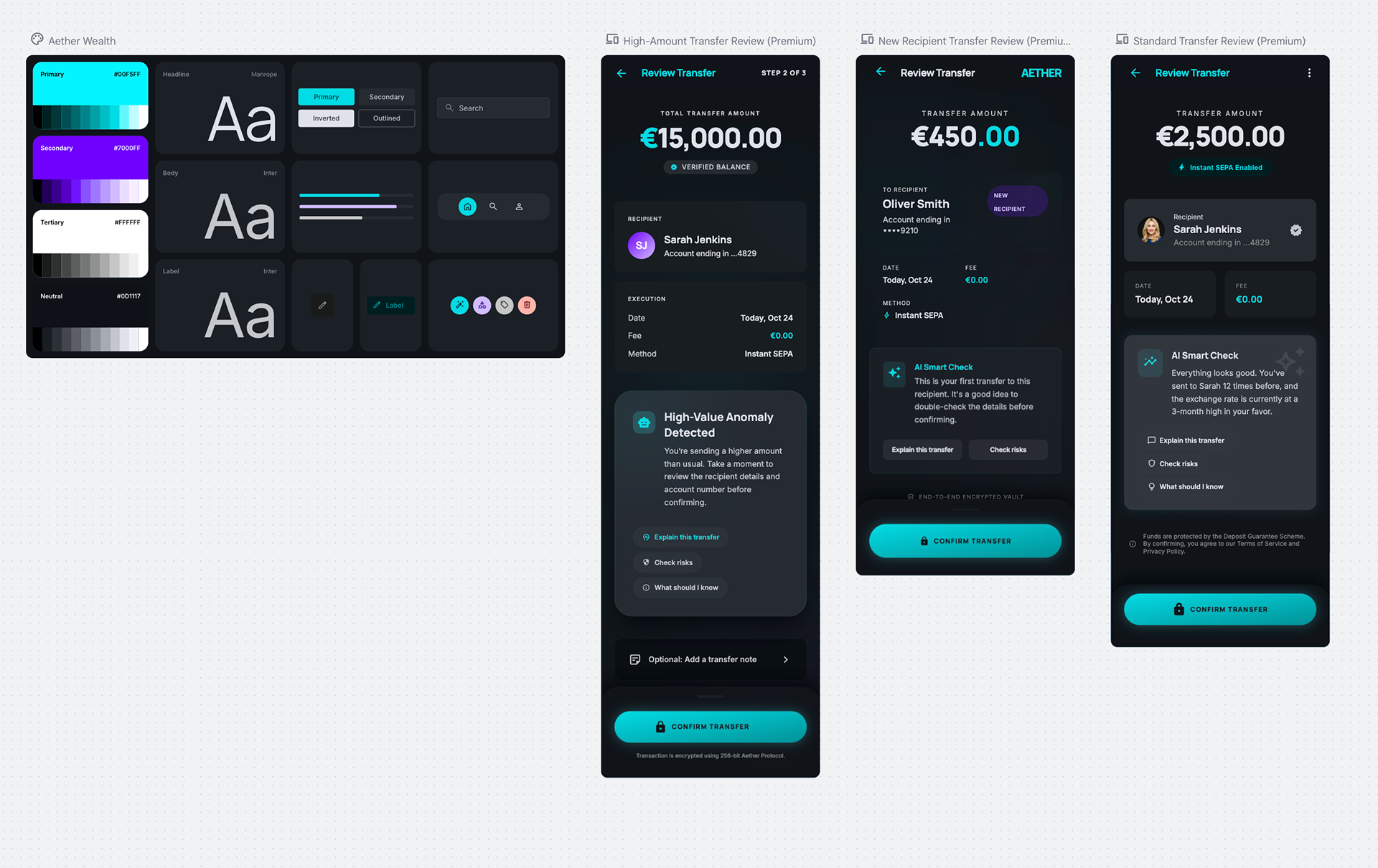
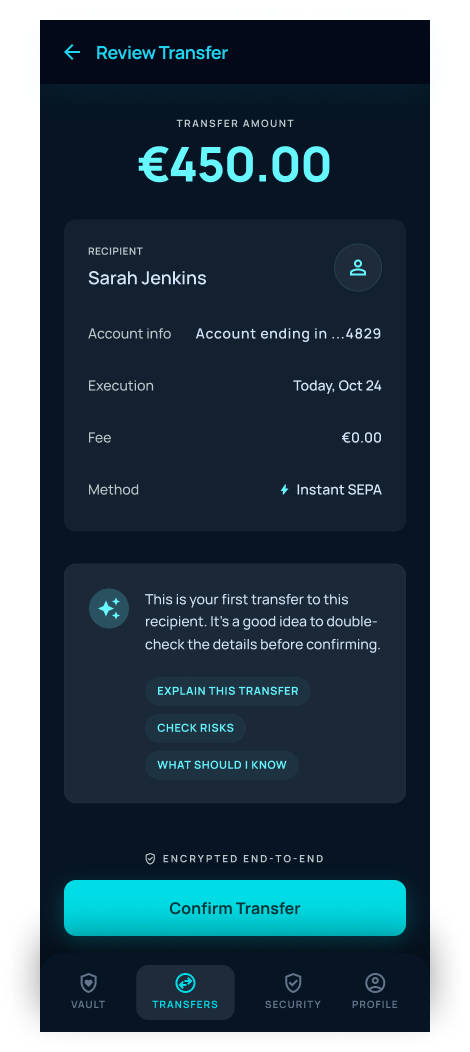
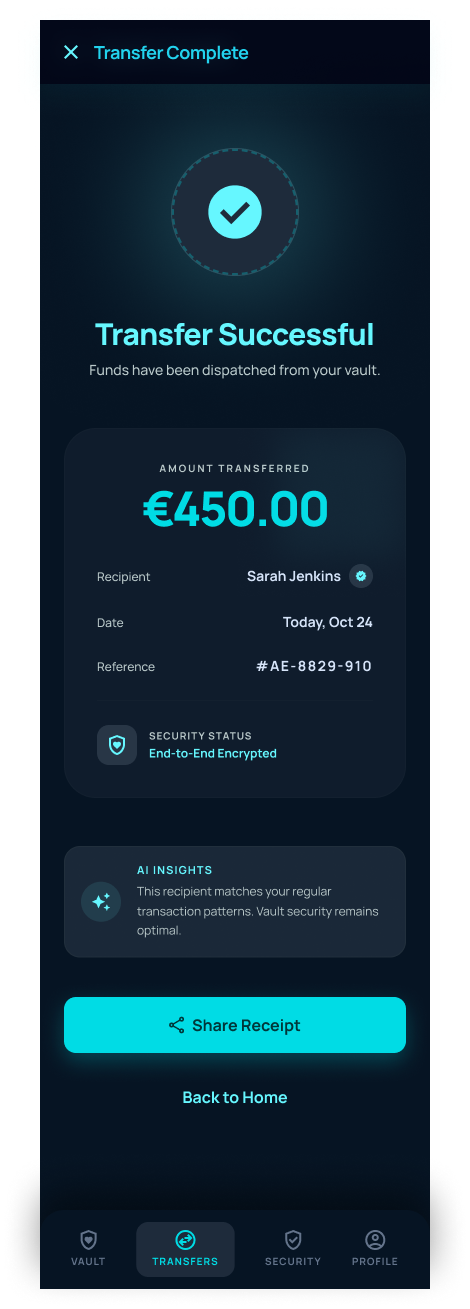
The experience was designed as a single, consistent screen with multiple contextual states instead of separate interfaces. In the default scenario, the system stays almost invisible, offering reassurance. When the amount is unusually high or the recipient is new, it gently encourages users to review or verify details. The layout remains unchanged — only the AI content adapts, keeping the experience predictable and coherent.
A key part of the design was tone. The system communicates in a clear, calm and human way, avoiding technical language and fear-based messaging. It behaves more like a supportive guide than a warning system, helping users stay aware without creating anxiety.
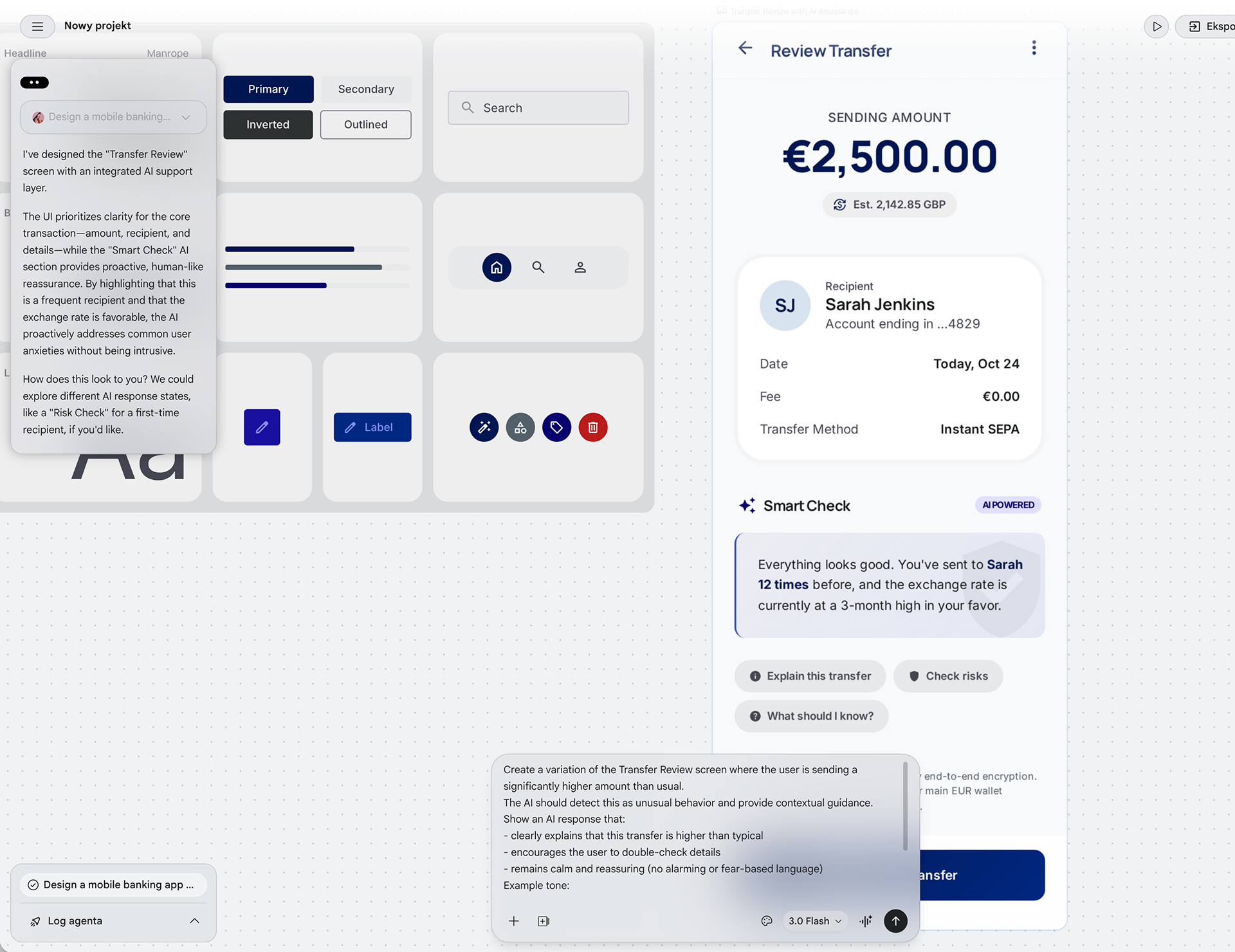
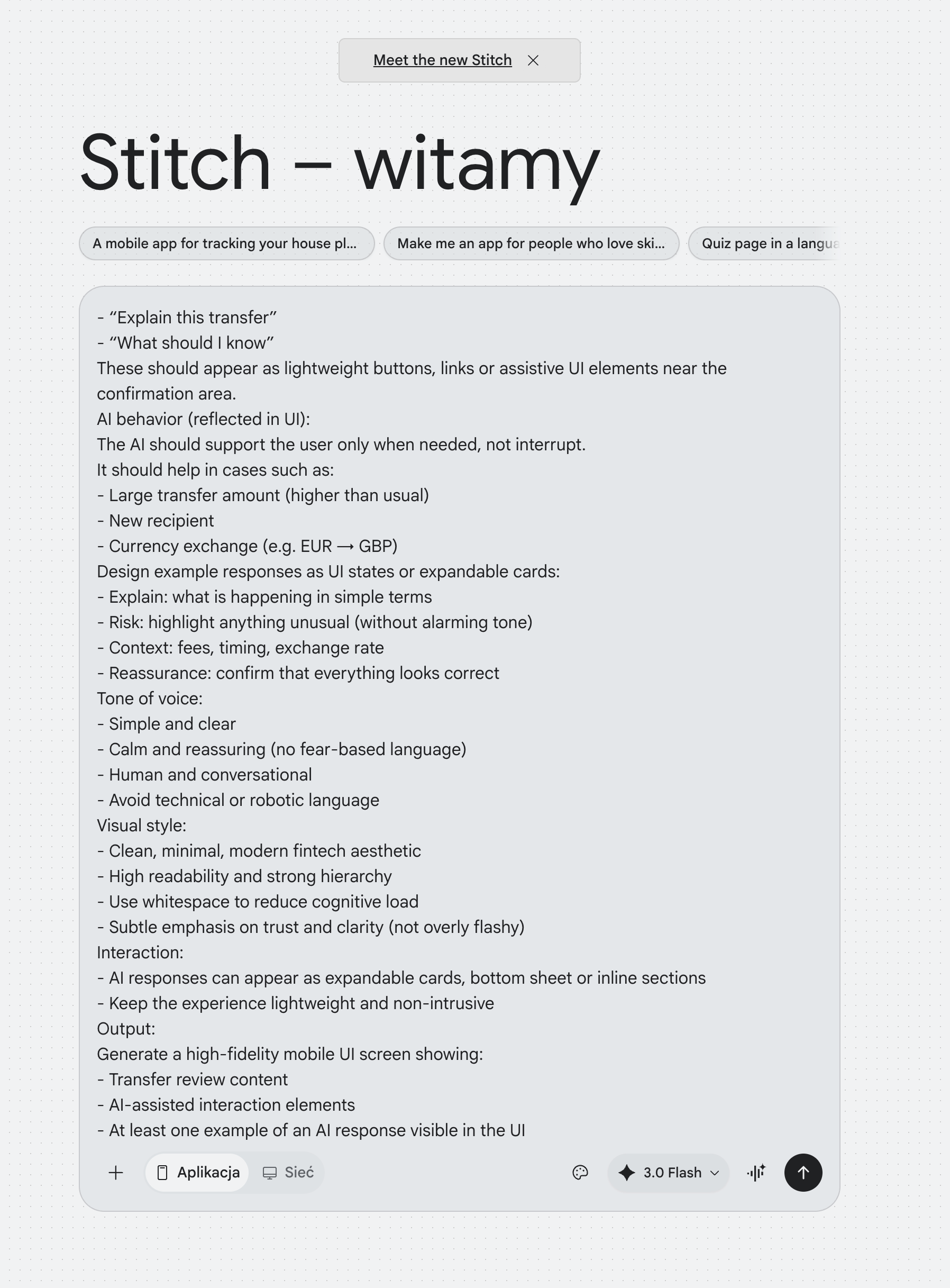
To explore the concept, I used generative tools with structured prompts defining context, interaction model and expected behavior. While this enabled fast iteration, the outputs were often inconsistent and required refinement. I adjusted prompts to enforce a single system, remove visual noise and align all states into one coherent experience.
This process made it clear that AI can generate options, but not resolve them. The output still requires human judgment — to interpret, curate and correct what AI does not handle well, shaping it into something coherent and responsible.
In this context, the role of the designer shifts from creating screens to guiding systems — making decisions, ensuring coherence and defining how the product behaves.
This project reflects a broader shift in UX: from designing interfaces to designing behavior, and from guiding interactions to supporting decisions.